
Evidence-based
ostomy care.
Applying the recommendations in practice
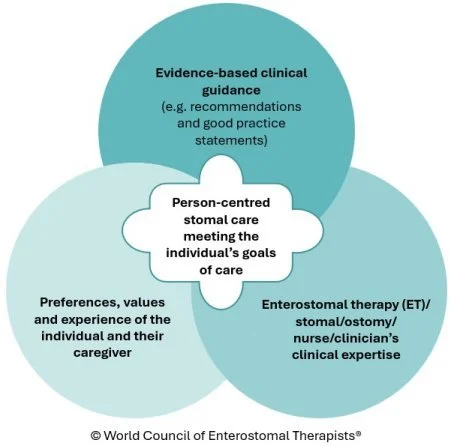
Evidence based practice aims to achieve the best stomal care to meet goals of care for the individual. This looks different in practice for each person living with or expecting a stoma.
Evidence-based stomal care is achieved through applying:
Evidence based clinical guidance based on research and consensus expertise, such as the recommendations and good practice statements in the WCET™ IOG (Third edition),
Your own clinical judgement based on the clinical and geographic context, the resources available and your assessment of the individual, and
The individual’s unique preferences, values and experiences, and that of their family and other caregivers.
The full version of the WCET™ IOG (Third edition) includes resources and implementation considerations to help busy enterostomal therapy (ET)/stomal/ostomy nurse/clinicians to apply the recommended practice.
Implementing recommended practice across the individual’s care journey
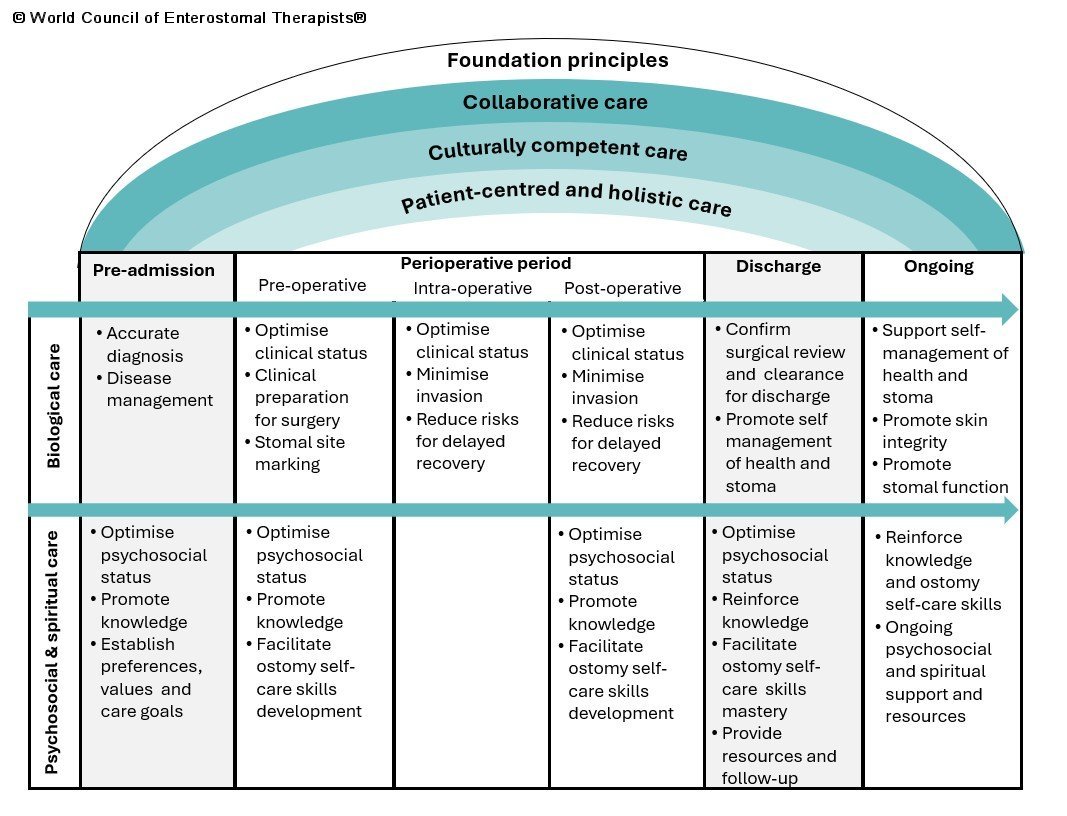
Enterostomal therapy (ET)/stomal/ostomy nurses and clinicians work with individuals at all stages of their journey with a stoma - from before the stoma is formed, through the peri-operative period and over the long term, either in the community or health care/residential care settings.
The following links provide a quick resource to access the clinical recommendations most relevant to your patient’s journey stage.

Perspectives on stomal care from the global community - International Delegate contributions.
Cultural competency is essential within holistic stomal care because beliefs about the body, illness, privacy, and self-management vary across geographic, cultural and religious contexts. In most parts of the world, ET/stoma/ostomy nurses/clinicians work within a multicultural and linguistically diverse setting.
The WCET™ IOG (Third edition) includes the Purnell Model of Cultural Competence, which provides a framework for cultural competency. The IOG WCET™ Panel has been assisted by the WCET™ International Delegates to provide perspectives on stomal care from over 30 countries to enhance the implementation of the recommendations and best practice statements in different health systems, cultural and religious settings, and in areas with various access to resources.